
Victoria Brusa, M.A. Candidate in Democracy and Governance, Georgetown University
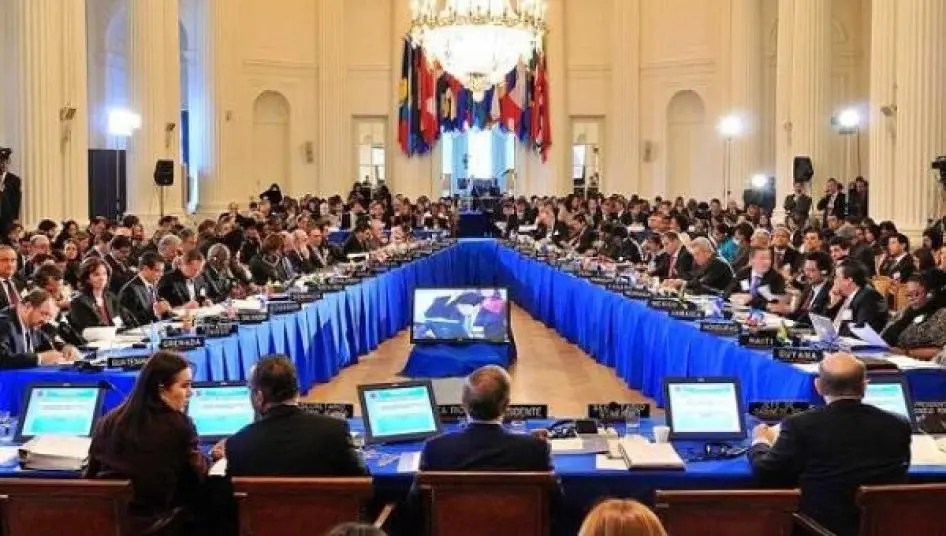
The U.S. military intervention in Venezuela and the capture of the country’s dictator, Nicolás Maduro, have sharply deepened divisions among Latin American states regarding their positions toward the United States. These developments have not only reshaped political dynamics within Venezuela itself but have also exposed structural fractures in the region’s multilateral decision-making mechanisms. This became evident during the Extraordinary Session of the Permanent Council of the Organization of American States (OAS), convened to address the situation in Venezuela at the request of Colombia—holder of the Council’s temporary presidency—and supported by Chile, Brazil, Guatemala, Uruguay, and Mexico.
The session revealed a geopolitical debate between two clearly defined blocs. On the one hand, a group of states led by Brazil, Mexico, and Colombia firmly opposed the U.S. intervention on legal and institutional grounds, emphasizing international law, state sovereignty, and the prohibition of the use of force. On the other hand, a second bloc headed by the United States and supported by Argentina, Paraguay, and Ecuador framed the unilateral action undertaken by the U.S. government as a legitimate response to authoritarianism, human rights violations, and transnational criminal activity.
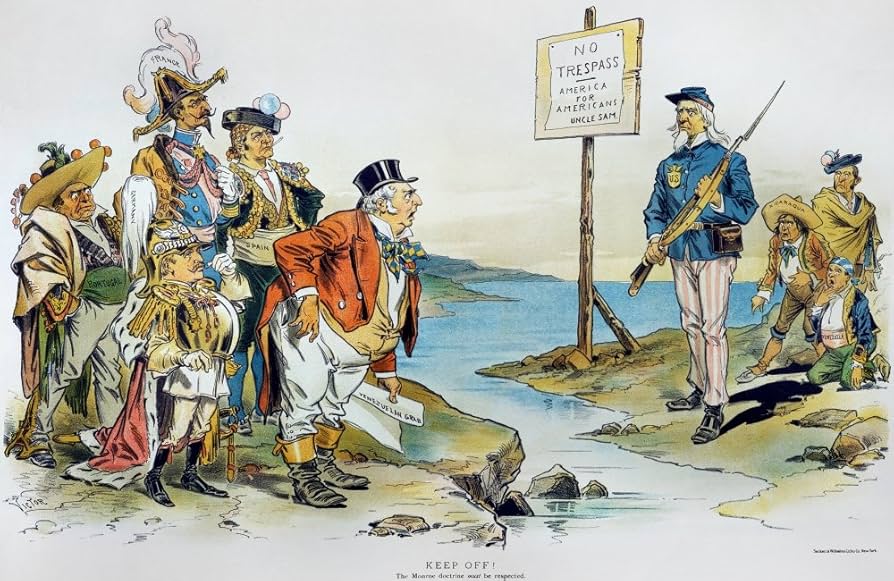
Underlying this debate is a profound division among Latin American countries regarding the Trump administration’s National Security Strategy and its announced “Trump Corollary to the Monroe Doctrine,” which reasserts U.S. supremacy over the region, portrayed by Washington as its closest sphere of influence. The developments in Venezuela exposed deep disagreements over how sovereignty, bilateral relations, and multilateralism are understood across Latin America—differences that the OAS has so far been unable to resolve. To date, the organization has proven incapable of fostering consensus among its member states, either regarding the unfolding events or in articulating a roadmap to address the challenges posed by the U.S. intervention in Venezuela and a potential democratic transition in the country.
Opposition to the Intervention: Sovereignty, International Law, and Regional Stability
Colombia, Brazil, and Mexico led a coalition that strongly opposed the actions undertaken by the Trump administration. These countries expressed deep concern about violations of international law, the prohibition of the use of force, and the principles of sovereignty and territorial integrity of states, enshrined both in the United Nations Charter and in the Charter of the Organization of American States. From their perspective, the intervention was interpreted as a unilateral military action by a foreign power against the sovereign territory of a hemispheric state, with potentially destabilizing consequences for regional and hemispheric security.
“We express our categorical rejection of any action that undermines the sovereignty and political integrity of Venezuela,” emphasized Colombia’s Vice Minister of Foreign Affairs, Mauricio Jaramillo Jassir, who addressed the General Assembly via Zoom. This position was echoed by the delegations of Brazil and Mexico, and supported—albeit in more cautious terms—by Chile, Uruguay, and Guatemala. These countries collectively stressed that military actions conducted by the United States on Venezuelan territory set a “grave precedent” for the stability and security of the region. In an official statement, Brazilian President Luiz Inácio “Lula” da Silva warned that such initiatives undermine the already fragile liberal international order and contribute to a world governed by the primacy of force rather than by rules.
The United States and Its Supporters: Security, Criminality, and Strategic Influence
The United States Ambassador to the OAS, Leandro Rizzuto, gave an unequivocal response. He denied that the actions carried out by U.S. intelligence services and the military constituted a “military operation,” asserting instead that they amounted to a law-enforcement action aimed at capturing a fugitive “narco-criminal” facing serious charges before U.S. courts. The ambassador further claimed that the intervention did not obstruct Venezuela’s democratic development; on the contrary, he argued, it removed the “main obstacle” to the restoration of constitutional order in the country. This interpretation was closely linked to Washington’s broader regional vision, articulated through what officials have described as the “Trump Corollary” to the Monroe Doctrine, recently detailed in the new U.S. National Security Strategy published by the White House. In this context, Latin America was portrayed as the United States’ “neighborhood,” one that Washington is unwilling to allow to become a hub for criminal networks linked to extra-hemispheric powers such as Russia, Iran, or China.
The U.S. position was categorically supported by Argentina and El Salvador, as well as by the delegations of Ecuador, Panama, Peru, Bolivia, Paraguay, and Costa Rica. The Argentine ambassador to the OAS explicitly praised President Trump’s “decisive action” in the capture of Nicolás Maduro, whom he described as the leader of two criminal organizations—the Cartel de los Soles and Tren de Aragua—both of which had been designated as terrorist organizations by the Argentine government.
Ecuador, for its part, argued that international law and its principles should not hinder the “responsibility to act” of states in the face of persistent human rights violations and entrenched narco-criminality. The Panamanian delegation recalled the 1989 U.S. military intervention that overthrew dictator Manuel Noriega, portraying it as the starting point for the restoration of constitutional order and democratic stability in the country.
The Limits and Challenges of Pan-American Multilateralism
Despite their sharp disagreements, both blocs converged on a limited set of shared concerns. Among these was a call to respect the will of the Venezuelan people and to ensure their participation in any future democratic transition, primarily through the organization of free and fair elections—an outcome that, for the time being, appears unlikely. Latin American states also broadly agreed on the importance of inclusive participation by Venezuelan civil society in any transition process.
A widespread concern was also expressed regarding the potential deterioration of Venezuela’s humanitarian situation, where a significant portion of the population already lives below the poverty line. Several delegations warned that further instability could trigger a new wave of migration toward neighboring countries, particularly Brazil and Colombia, and underscored the need for international cooperation to address this risk.
Finally, there was near-unanimous recognition of the grave human rights violations committed by the Maduro regime. Peru requested—and was granted—a minute of silence in memory of the victims, and numerous delegations called for the release of all political prisoners, estimated to number around one thousand, including Panamanian and Argentine citizens.
Overall, the organization of elections, the monitoring of humanitarian and migratory conditions, the fight against organized crime, the release of political prisoners, and the peaceful advancement of a democratic transition represent not only major challenges but also an opportunity for the Latin American multilateral system. Organizations such as the OAS need to demonstrate to the region, the Western Hemisphere, and the world that they remain relevant. This is especially pressing in an increasingly fragmented international environment that is progressively drifting away from the principles underpinning multilateralism.
Once again, the session underscored the limitations of the Latin American multilateral system’s ability to respond effectively to the region’s most pressing crises. Unable to prevent the autocratic consolidation of the Maduro regime, the OAS also failed to articulate a common position or a coordinated roadmap in response to the latest developments. As OAS Secretary General Albert R. Ramdin noted, the organization faces the challenge of moving beyond its role as a forum for information exchange and viewpoints and becoming an institution capable of actively improving the lives of Venezuelans and Latin Americans by contributing to the restoration of constitutional order and democracy.
Victoria Brusa is a political communication and public affairs specialist from Argentina, currently pursuing a Master’s in Democracy and Governance at Georgetown University as a 2025 Fulbright and PEO Scholar.
Before joining the program, she served as Press Director for Argentina’s Chief of Staff and the Ministry of the Interior, leading media strategy and communications at the highest levels of government. Her previous experience includes working as a press advisor in Argentina’s National Congress and on the presidential campaign of La Libertad Avanza. She also worked in the private sector as a senior account analyst at a leading PR agency, advising clients in the energy, finance, and consumer goods industries, as well as academic and international institutions.
 Democracy & Society Journal
Leave a comment