
Victoria Brusa, M.A. Candidate in Democracy and Governance, Georgetown University
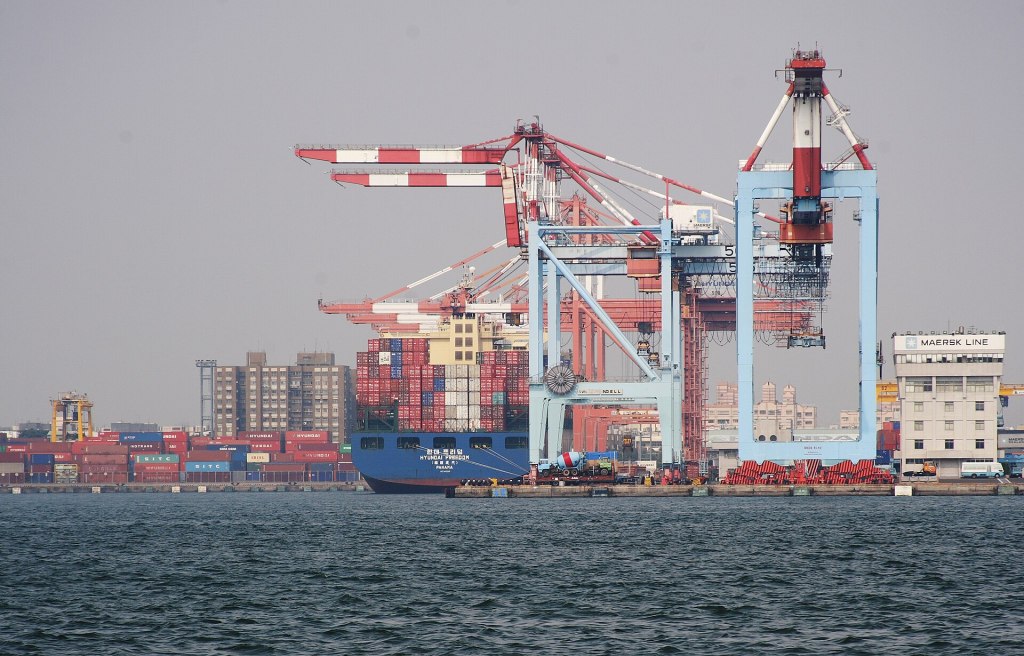
A few weeks ago, the European Union and the Mercado Común del Sur (Mercosur) trading blocs signed an agreement creating the world’s largest free trade zone, following more than twenty-five years of negotiations.
Numerous analyses of the agreement’s economic impact on both regions have already been published, featuring both harsh critics and strong supporters on each side of the Atlantic. However, beyond its economic implications, this article argues that the agreement’s significance lies primarily in the timing of its approval. It becomes particularly relevant at a moment when EU–U.S. relations are more strained than they have been in decades, and when the United States has increasingly resorted to tariffs as a tool to impose conditions on governments perceived as insufficiently aligned—such as Brazil.
There are still further steps to be taken before the agreement enters into force. It must be approved by the European Parliament and by the national legislatures of each Mercosur member state—Brazil, Argentina, Uruguay, and Paraguay. In addition, the European Parliament has initiated a legal process to scrutinize the agreement’s terms, seeking a ruling from the Court of Justice of the European Union.
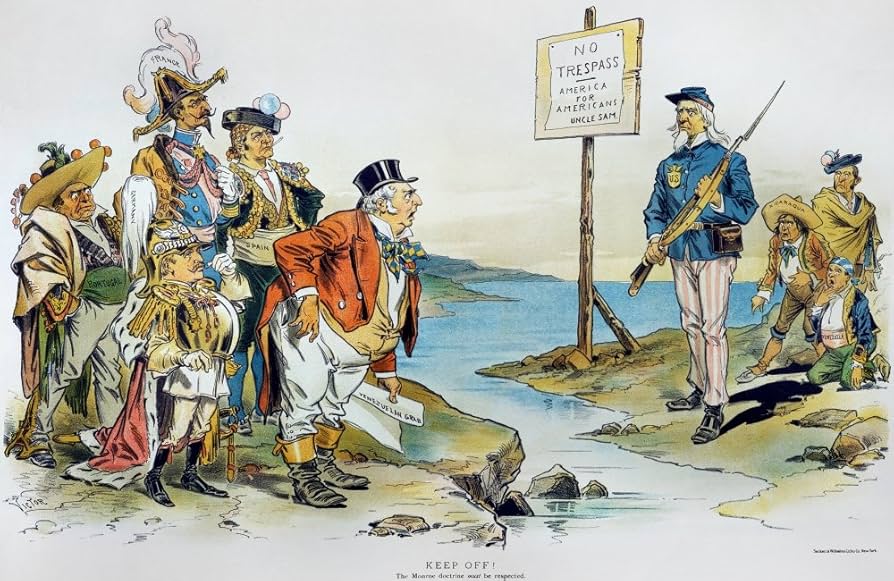
Nevertheless, this significant step toward signing the agreement occurs in a context defined by a U.S. National Security Strategy (NSS) that downgrades Europe’s status as a strategic and historical partner. It also frames Latin America as Washington’s backyard and an area of exclusive influence. This outlook has been reinforced by the revival of a coercive hemispheric logic, embodied in the so-called Trump Corollary to the Monroe Doctrine, as well as by the recent removal of Venezuela’s dictator, Nicolás Maduro.
Taken together, these dynamics suggest that the approval of the EU–Mercosur agreement should not be understood solely through an economic lens, but also as a strategic response by both regions to shifting power relations and escalating tensions within the transatlantic order.
A Transatlantic Relationship Under Strain
On the European side, the approval of a free trade agreement with Mercosur can be understood as a strategic response to President Trump’s economic, geopolitical, and security policies, which have placed transatlantic relations under their greatest strain since the alliance was forged in the aftermath of World War II.
The differences between European leaders and the Trump administration are not limited to economic issues related to tariffs and free trade but also extend to political and security matters. In April 2025, only four months into the new administration, U.S. Vice President J.D. Vance delivered a highly controversial speech at the Munich Security Conference, arguing that Europe should assume primary responsibility for its own security and defense. In the midst of the war in Ukraine, he further argued that the greatest threat facing the Old Continent was not China, nor even Russia, but rather “the threat from within”—namely, Europe’s retreat from some of its most fundamental values and the erosion of “free speech,” a claim framed in response to the growth of far-right movements in Europe.
Later that year, another episode of turmoil added fuel to an already unstable relationship. The leak of a draft proposal for a peace deal in Ukraine—negotiated exclusively by senior U.S. and Russian officials—generated shock not only because of the substance of its provisions, widely perceived as aligned with Russian interests, but also because of the complete exclusion of European actors from the negotiations. The proposal would have required Kyiv to cede additional territory in eastern Ukraine, limit the size of its military, and formally renounce any future accession to NATO. According to press reports, the plan was drafted by Trump’s envoy, Steve Witkoff, with input from Secretary of State Marco Rubio and Trump’s son-in-law, Jared Kushner, following a meeting with Russian envoy Kirill Dmitriev. Ukrainian and European leaders were entirely absent from these discussions. Such an agreement would have left not only Ukraine, but also Europe as a whole, more vulnerable to future Russian aggression.
Perhaps the clearest indication of Europe’s downgrading as a strategic partner for the United States came in December, when the Trump administration released its new National Security Strategy (NSS). The document marked a decisive shift in Washington’s approach to Europe. It not only reemphasized the alleged “economic decline” of the Old Continent and the need for a substantial increase in defense spending, but also warned of risks of “civilizational erasure.” Once again, the primary threat identified was not Russia, but rather the “activities of the European Union and other transnational bodies that undermine political liberty.” As Max Bergman, Director of the Europe, Russia, and Eurasia Program at the Center for Strategic and International Studies (CSIS), observed, “The strategy effectively declares war on European politics, Europe’s political leaders, and the European Union.”
Finally, tensions within the NATO alliance intensified further in the following weeks when Stephen Miller, a senior aide in the Trump administration, claimed that the United States had the right to take control of Greenland. This position was later endorsed by President Trump himself, who stated that any outcome other than U.S. control of the Danish autonomous territory was “unacceptable.” The issue subsequently became a central topic of discussion at the 2026 World Economic Forum.
Following several days of heightened tensions and public exchanges between U.S. and European leaders—including threats by President Trump to impose new tariffs on the European Union and counter-threats by French President Emmanuel Macron to invoke the EU’s Anti-Coercion Instrument—the American president ultimately moved to de-escalate the situation. In a public address at Davos, Trump moderated his earlier statements and pledged that the United States would not use force to assert control over the Danish territory.
Strategic Incentives on Both Sides of the Atlantic
Within this context, the EU–Mercosur Free Trade Agreement has not only economic but also strategic and geopolitical importance for the European Union. As explained in the EU factsheet, the agreement helps diversify and secure supply chains across the Old Continent, diversify energy sources, and ensure access to raw materials, rare earths, and strategic minerals. For EU companies, it will enable exporters to save approximately 4 billion euros per year in customs duties and allow them to bid for public contracts on equal terms with Mercosur firms.
A few additional figures illustrate the importance of the Mercosur market: it has a population of approximately 270 million, and it ranks as the sixth-largest economy outside the EU, with an annual GDP of €2.7 trillion. If approved by the European Parliament, this agreement would create one of the largest free trade zones in the world.
More broadly, as discussed above, the deterioration of economic, political, and security relations with the United States—which many European leaders no longer perceive as a fully reliable partner—has compelled the European Union to diversify and secure both its supply chains and its trading partnerships. This shift was explicitly acknowledged by the President of the European Commission, Ursula von der Leyen, during her address at the World Economic Forum in Davos, when she stated: “This agreement sends a powerful message to the world: that we are choosing fair trade over tariffs, partnership over isolation, sustainability over exploitation, and that we are serious about de-risking our economies and diversifying our supply chains.”
This broader strategic reorientation also helps explain the signing of a free trade agreement with Indonesia in October 2025, the updating of the existing agreement with Mexico, and the successful advancement of negotiations with India toward a new free trade agreement. As Frances Burwell, a distinguished fellow at the Atlantic Council’s Europe Center, observed, “the new U.S. National Security Strategy made clear to the EU that trade relations with Latin America were a geopolitical imperative.”
Mercosur member states also find the agreement strategic. Brazil, the largest economy in Latin America, has identified the deal as an alternative outlet following its recent tariff dispute with the U.S. government, which imposed additional 40 percent tariffs on Brazilian goods in July 2025. Even after exceptions were granted in November for several products for which Brazil is a key supplier—such as orange juice, coffee, and cane sugar, among others—an analysis conducted by the Adrienne Arsht Latin America Center of the Atlantic Council showed that, since the implementation of the new tariff scheme, U.S. imports of Brazilian products have deviated significantly from their pre-tariff trend line.
Furthermore, the relationship between President Trump and Brazilian President Luiz Inácio Lula da Silva has deteriorated politically. Brazil has emerged as a leading actor within a group of Latin American states opposing the U.S. military intervention in Venezuela and the capture of its dictator, Nicolás Maduro. The Brazilian president has repeatedly argued that these actions violate international law and set a “dangerous precedent” for regional security. More recently, the White House announced the suspension of visa issuance for 75 countries, including Brazil.
As Ignacio Albe, Assistant Director at the Atlantic Council’s Adrienne Arsht Latin America Center, explains: “The EU–Mercosur trade deal is an opportunity for the European and South American markets to deepen their integration. For countries like Brazil and Argentina, it offers more secure access for their commodities to the European market, while lowering import costs for consumers—not only for consumer goods but also for key manufacturing inputs.”
“For Europe,” Albe adds, “the agreement provides increased access to the region’s natural resources, from agricultural products to critical minerals, while also securing an important market for European industries. It also presents a number of secondary—but still highly significant—incentives, including the treaty’s requirement to terminate export taxes, which offers Argentina, in particular, an incentive to reduce its long-standing and distortionary agricultural export duties, a policy that has historically constrained one of the country’s most globally competitive sectors.”
Taken together, the EU–Mercosur Free Trade Agreement should be understood as part of a broader strategic recalibration unfolding on both sides of the Atlantic. For Europe, the agreement represents a response to the undeniable need to reduce interdependence with the United States, secure access to raw materials and other strategic goods, and guarantee market access for European companies amid an increasingly de-globalized, tariff-driven trade environment shaped by U.S. policy choices. For Mercosur states, the deal offers not only economic opportunities but also a pathway to diversify external partnerships and reduce exposure to unilateral pressure from Washington. While the EU–Mercosur agreement will not, by itself, redefine global power structures, it illustrates how trade policy is being repurposed as a tool of strategic hedging, autonomy, and resilience in an international environment marked by growing instability and contested leadership.
Victoria Brusa is a political communication and public affairs specialist from Argentina, currently pursuing a Master’s in Democracy and Governance at Georgetown University as a 2025 Fulbright and PEO Scholar.
Before joining the program, she served as Press Director for Argentina’s Chief of Staff and the Ministry of the Interior, leading media strategy and communications at the highest levels of government. Her previous experience includes working as a press advisor in Argentina’s National Congress and on the presidential campaign of La Libertad Avanza. She also worked in the private sector as a senior account analyst at a leading PR agency, advising clients in the energy, finance, and consumer goods industries, as well as academic and international institutions.

 Democracy & Society Journal
Leave a comment