
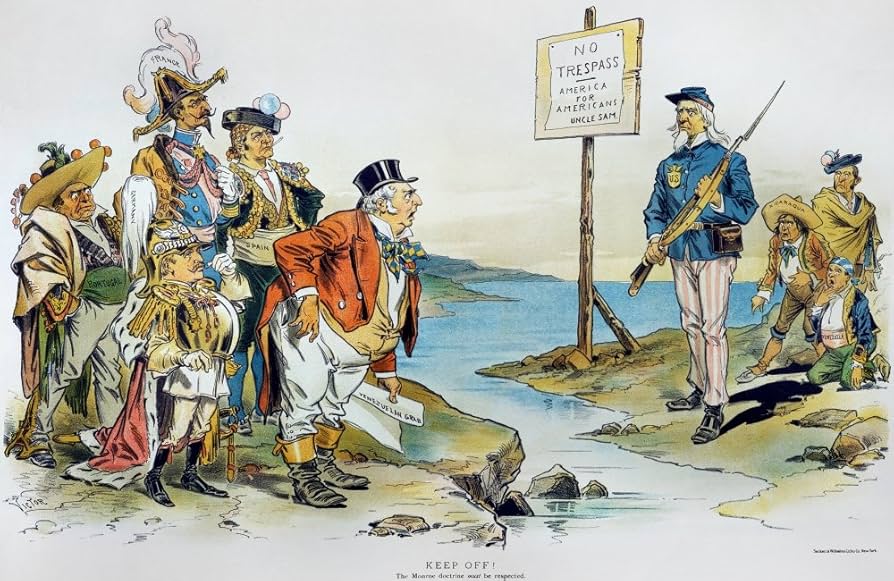
Honduras may prove to be the clearest test case of a renewed U.S. hemispheric strategy under the Trump administration—what some analysts have begun calling a modern “Trump Corollary” to the Monroe Doctrine. After years of perceived disengagement and strategic ambiguity toward Central America, Washington has reasserted itself in the region, signaling that stability and geopolitical alignment in its near abroad are once again core foreign policy priorities.
The Honduran electoral process of 2025, culminating in the election of President Nasry Asfura, unfolded against a backdrop of institutional fragility, allegations of fraud by the outgoing government, and renewed U.S. activism in domestic political developments. Having exited an eleven-year authoritarian period in 2021, Honduras faced high-stakes challenges that posed an almost existential threat to its fragile democracy.
A Fragile Democracy Under Pressure
The crisis did not begin on election day. Months earlier, the campaign period had already been marked by allegations of corruption, attempted fraud, institutional interference, and episodes of political violence. Honduras remains a newly reconstituted democracy, still grappling with the legacies of authoritarian governance (2009 – 2021) and weak institutional trust.
In the weeks preceding the vote, the government led by then-President Xiomara Castro publicly alleged that electoral fraud was being orchestrated against it. When the official candidate, Rixi Moncada, finished third—behind Salvador Nasralla of the Liberal Party and Nasry Asfura of the National Party—the government refused to formally recognize the results and pressed the National Electoral Authority to override them. This refusal triggered a political and institutional crisis, raising concerns that Honduras might once again enter a period of constitutional rupture.
The contested nature of the election quickly transcended domestic politics and moved into the hemispheric arena.
The Organization of American States (OAS) became the principal diplomatic stage for addressing the Honduran crisis. At the request of the United States, Argentina, Paraguay, Costa Rica, and other member states, the OAS convened two extraordinary sessions of its Permanent Council.
On November 25, 2025, the Council met to address developments and concerns regarding interference in both the National Electoral Council and the Electoral Justice Tribunal. The session stood out not only for its urgency but also for the level of U.S. engagement. Deputy Secretary of State Christopher Landau participated directly, underscoring Washington’s close monitoring of the process. As he stated during the session, “the eyes of the world, including those of the United States, are in Honduras.”
Furthermore, the OAS deployed an electoral observation mission to Honduras. Following election day, despite significant delays in vote counting, the mission concluded that the elections were clean and fair, with no evidence of systematic fraud. This finding proved decisive. It consolidated Nasry Asfura’s victory over Salvador Nasralla of the Liberal Party and Rixi Moncada, narrowing the political space for claims of illegitimacy.
U.S. Engagement and Regional Strategy
U.S. involvement, however, extended beyond multilateral diplomacy. President Donald Trump personally intervened in the electoral narrative. On Truth Social, he publicly endorsed Nasry Asfura, declaring that the two would work together to “fight the Narcocommunists, and bring needed aid to the people of Honduras.”
Asfura’s campaign team later indicated that this endorsement was decisive in securing his victory over Nasralla. In a region where the United States remains a strategic actor in trade, migration, and security, Washington’s signals can significantly shape the domestic political landscape. Trump’s endorsement reinforced this reality.
But the geopolitical significance of the Honduran election became even clearer following developments on January 3, when the United States conducted an operation that captured Venezuelan dictator Nicolás Maduro and his wife in Caracas.
With much of Latin America now realigned more closely with U.S. strategic interests—excluding Nicaragua and Cuba—Washington’s unusual degree of engagement in Honduras appears even more strategic. It is reasonable to affirm that the Trump administration sought to prevent the consolidation of another non-democratic regime aligned with Maduro and the Ortegas, particularly in a strategically located country such as Honduras.
This last country occupies a critical geographic and political position in Central America. It is key to migration routes, regional security frameworks, and economic integration corridors. Allowing it to drift toward an anti-U.S. axis would have had cascading consequences. The elections, therefore, were not only nearly existential for Honduran democracy but also of high strategic relevance for consolidating U.S. influence in the Western Hemisphere.
Inauguration and Diplomatic Realignment
President Asfura’s inauguration in Tegucigalpa reflected this tense political moment. The ceremony was deliberately low-profile and highly institutional, designed to navigate a volatile environment without further escalation. Just days before the inauguration, a National Party congresswoman was attacked with a Molotov cocktail outside the National Congress, fortunately suffering only minor injuries.
In line with Asfura’s non-confrontational style, the swearing-in ceremony—traditionally held in a national stadium—was moved to the National Congress. Members of Congress from all parties attended, along with Evangelical and Catholic clergy and representatives of the military, which continues to hold considerable influence. Both the ceremony and Asfura’s speech emphasized unity, dialogue, and cooperation across ideological lines.
One of the clearest implications of Asfura’s victory is Honduras’s diplomatic repositioning. This shift is characterized by a recalibration away from closer ties with Russia, China, Iran, and Venezuela toward renewed alignment with Washington, which is considered the main priority. For the United States, Honduras represents an opportunity to consolidate a pro-U.S. bloc across much of Central America. For Honduras, alignment with the United States offers prospects for economic stabilization, security cooperation, and diplomatic rehabilitation.
The inauguration itself marked a new beginning in the Honduras–U.S. relationship. The newly appointed Foreign Affairs Minister, Mireya Agüero, described the United States as the country’s principal “strategic ally.” In one of her first interviews with international media on the day before the inauguration, Mireya emphasized the enormous challenge of “reconstructing Honduran diplomacy” after years in which the Xiomara Castro administration had aligned the country with Russia, China, Iran, and Venezuela.
The government’s first actions on inauguration day underscored this reorientation. Asfura formally accepted the credentials of the Israeli and European Union ambassadors to Honduras. Early signs suggest that the alignment with the United States is already yielding political dividends. Asfura was recently invited by President Donald Trump to a lunch and meeting at Mar-a-Lago—an encounter Trump described as “highly important.”
A Test Case for Hemispheric Strategy
Overall, what distinguishes the Honduras episode is the degree of coordinated institutional and presidential involvement of the United States in Central America. Through the OAS, direct executive endorsement, and post-electoral geopolitical signaling, the Trump administration demonstrated a willingness to assert hemispheric influence in ways reminiscent of earlier eras of U.S. regional doctrine.
Whether this constitutes a stabilizing intervention or sets a precedent for selective democratic defense remains an open question.
What is clear, however, is that Honduras (and the region) now stands at a crossroads—not only as a fragile democracy emerging from authoritarian rule, but also as a test case for a reinvigorated U.S. approach to the Western Hemisphere. The outcome of this moment will shape both the trajectory of Honduran democracy and the credibility of Washington’s renewed commitment to its southern neighbors.
Victoria Brusa is a political communication and public affairs specialist from Argentina, currently pursuing a Master’s in Democracy and Governance at Georgetown University as a 2025 Fulbright and PEO Scholar.
Before joining the program, she served as Press Director for Argentina’s Chief of Staff and the Ministry of the Interior, leading media strategy and communications at the highest levels of government. Her previous experience includes working as a press advisor in Argentina’s National Congress and on the presidential campaign of La Libertad Avanza. She also worked in the private sector as a senior account analyst at a leading PR agency, advising clients in the energy, finance, and consumer goods industries, as well as academic and international institutions.

 Democracy & Society Journal
Leave a comment