
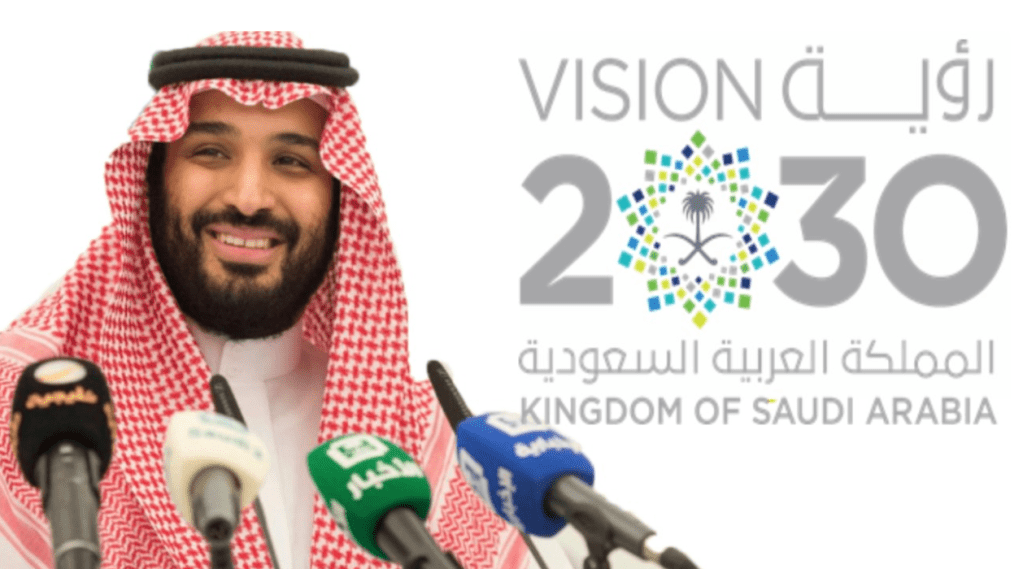
Saudi Arabia stands at a pivotal moment in its history. Oil wealth has long shaped the country’s economy and society, but decades of dependence on government subsidies and a rigid social system are showing their limits. A younger, more connected generation is entering the workforce, eager for opportunity and frustrated by old hierarchies. At the same time, global economic pressures and the need for diversification demand change. These pressures have sharpened in recent years as oil prices have softened, Vision 2030 timelines have been revised, and flagship mega‑projects like NEOM have been scaled back or delayed amid mounting costs and fiscal deficits. In this context, Mohamad Bin Salman’s (MBS) push to transform Saudi Arabia is ambitious, but the path forward is neither simple nor guaranteed, especially as regional crises such as the Gaza war and stalled Saudi–Israeli normalization talks complicate Riyadh’s external environment.
The country’s ambitious Vision 2030 plan promises to transform the economy, society, and governance structures, but the path forward is fraught with obstacles. Nearly a decade into its launch, the government has begun to recalibrate Vision 2030, placing more emphasis on technology and religious tourism and quietly scaling back some of the most extravagant urban ‘giga‑projects’ as costs, engineering challenges, and lower oil revenues bite. By 2025, officials were already touting milestone achievements in non‑oil revenue and private‑sector growth, even as questions mounted about the sustainability and sequencing of the broader transformation. MBS has shown a willingness to pursue bold reforms, yet implementing them sustainably requires navigating deep-rooted economic dependencies, social conservatism, and entrenched institutional power. Understanding these challenges sheds light on both the limits and possibilities of MBS’s agenda.
MBS faces three obstacles as he endeavors to change Saudi Arabia, however, he already has the tools at his disposal to overcome these challenges.
The first challenge centers on maintaining fiscal stability while moving away from the rentier-state model. The younger population will need to take on new financial burdens that previous generations have not faced, and to do so without the safety net of state welfare is likely to lead to anger. At the same time, MBS must push ahead with the National Investment Strategy, which risks destabilizing the economy by driving up inflation and straining domestic resources. Those risks are no longer theoretical: years of aggressive spending, a fall in oil prices from around 100 to roughly 60 dollars a barrel, and cost overruns on projects like NEOM have pushed the government into deficit and forced a review and scaling‑back of some marquee investments. To prevent this, he needs a two-pronged response. First, as is already underway, remaining subsidies (particularly on fuel and utilities) must be phased out, but at a gradual pace. A rapid withdrawal will almost certainly lead to public backlash and economic disruption. The most effective approach is a tiered phase-out based on income: higher earners lose access first, while lower-income groups will continue to receive support through targeted programs. Crucially, the subsidy removal must be paired with clear improvements in citizen’s daily life. Part of the savings should be directed toward public transport and anti-corruption efforts, as they have proven to have broad public support. Although public transit development is already part of Vision 2030, it needs to extend beyond Riyadh, Jeddah, and Dammam and into outer regions, which will also support new infrastructure projects elsewhere in the country. MBS has shown his willingness to handle corruption with the 2017 anti-corruption purge, which was popular outside elite circles. He should build on this by making institutions more transparent and accountable; which, in turn, will allow institutions to shape the private sector by enforcing fair contracts, which encourages FDI. This strategy not only addresses the key obstacle but also generates broader benefits for his agenda.
The second challenge revolves around social restrictions. Wahhabi beliefs have long been tied to Saudi identity and have created a lasting tradition of religious conservatism. As MBS moves to overhaul the old economic model, he will have to navigate the rigid gender norms that previously were the backbone. To do this effectively, he must show that easing these norms is not breaking away from tradition but instead a necessary economic shift. Much of the groundwork is already in place. In 2016, he reduced the powers of the Mutawa, which changed the street-level atmosphere and made all future reforms easier. Women are now extremely present in the private sector, with a participation rate of 35.6% in 2021, well above the 2030 target. As the kingdom leans more heavily on tourism, entertainment, and services to hit Vision 2030 targets, sustaining these gains in women’s employment will be central to both economic performance and Saudi Arabia’s international image on human rights. To limit conservative anger, these changes need to be framed as rooted in values rather than Western requirements. Consulting conservative communities can help them feel heard, and their concerns should be taken seriously. This could mean allowing companies to require more modest workplace attire or maintaining gender-separated work and rest spaces where needed. At the same time, some men may worry (privately) about being replaced, especially as public-sector jobs decrease under Vision 2030. Redirecting funds toward skills training for all workers could ease this pressure and help ensure that both men and women benefit from the transition.
Finally, MBS will face the challenge of longevity – making sure the reforms he introduces actually last and that institutions can withstand the dissent covered above. Many of his critics may argue this will be his hardest obstacle, and there is truth to that. While he has shown he can take a firm stance on corruption, the entrenched elites around him are not easy to push aside. Many support keeping things as they are, rather than the social and economic shifts he is pursuing. The recent retrenchment on high‑profile projects and the quiet reshaping of Vision 2030 have already prompted questions about whether the most disruptive elements of the agenda will survive once fiscal and political pressures intensify. For the reforms to endure, he will have to overcome resistance within elite circles and the bureaucracy and make sure the changes become a part of institutions rather than tied to his own personal authority. This will add another layer of corruption protection, and allow changes to last.
MBS’s reform agenda is ambitious, and success is far from guaranteed. Economic restructuring, social liberalization, and institutional durability are deeply interconnected challenges, and missteps in any one area could undermine the others. Yet the tools are already in place: phased fiscal reforms, targeted anti-corruption measures, and strategic social adjustments provide a pathway forward. The critical factor will be embedding these changes within institutions rather than relying solely on MBS’s personal authority. If he can do this, Saudi Arabia may emerge with a more resilient economy, a more flexible society, and stronger governance structures. The mid‑course corrections of 2024–26—on mega‑projects, spending, and diplomatic initiatives—are an early test of whether the system can adapt without abandoning the core goals of transformation. But if resistance (economic, social, or elite) gains the upper hand, the ambitious vision risks being short-lived. Saudi Arabia’s future will depend on whether reform becomes an enduring feature of its institutions or remains the product of one leader’s will.
Gabriella Jensen is currently pursuing a Master’s degree in Democracy and Governance at Georgetown University, with previous dual Bachelor’s degrees in Political Science and Political Communication from Louisiana State University.
Works Cited
AGSI. “Saudi Women in the Workforce.” AGSI, 21 December 2022.
British Journal of Middle Eastern Studies. “Jihad, Yes, But Not Revolution: Explaining the Extraversion of Islamist Violence in Saudi Arabia.” BJMES, December 2009.
Foreign Affairs. “The MBS Economy: Can Technocratic Reforms Save Saudi Arabia?” FA, 27 January 2022.
International Monetary Fund. “Saudi Arabia: 2024 Article IV Consultation—Press Release and Staff Report.” IMF, 4 September 2024.
Soul of Saudi. “Mohammed Bin Salman | The Visionary Leader Transforming Saudi Arabia.” SOS, 31 August 2025.
Steve A. Yetiv. “How Saudi Arabia Has Dodged the Arab Spring.” The Arab Spring: The Hope and Reality of the Uprisings, 2012.
Time. “How MBS Transformed Saudi Arabia Over a Decade.” Time, 8 September 2025.
Deutsche Welle. “Saudi Arabia Reshapes Vision 2030 around New Priorities.” DW, 12 February 2026.
The Observer (UK). “Cost Overruns and Delays Force Saudi Arabia to Rethink Neom.” The Observer, 28 January 2026.
Middle East Monitor. “Saudi Arabia to Drastically Scale Back NEOM Megaproject amid Mounting Costs and Failures.” Middle East Monitor, 25 January 2026.
Arab News. “2025: A Milestone Year in Saudi Arabia’s Vision 2030 Journey.” Arab News, 3 January 2026.
Columbia Political Review. “Saudi Arabia’s Economic Transformation: Defeating the Resource Curse.” Columbia Political Review, 20 January 2025.
Hoover Institution. “The Chimera of Saudi–Israeli Normalization in This Moment.” Hoover Institution, 8 September 2025.
Arab Center Washington DC. “Saudi–Israeli Normalization Persists amid Gaza War.” Arab Center Washington DC, 6 May 2024.

 Democracy & Society Journal
Leave a comment