By Victoria Brusa, Katie Zeng, and Atiriya Singh (*).
Voters delivered a sharp rebuke of the administration’s tariff policies and the war with Iran in the 2026 midterms, handing Democrats control of both chambers of Congress. As the lame-duck session begins, the questions are how congressional Republicans, Democrats, and President Trump will respond, with the 2028 presidential race looming in the background. Below, professors at Georgetown’s Government Department weigh in on what the “blue wave” means for the country.
254
House seats won by Democrats
(19 races still uncalled)
54
Senate seats held by Democrats
(Alaska and Mississippi uncalled)
4
Georgetown experts weigh in
Results according to the Associated Press as of November 7, 2026.
In this roundup
- Nikola Ilić — Winning Elections Is Not Enough
- Tara McKelvey — A Win for Democrats, and for Some in China
- Jodi Vittori — This Election Was About Corruption, So Now What?
- Jeffrey W. Fischer — A Sweep in Scale and Scope
01 · Nikola Ilić
Winning Elections Is Not Enough
Nikola Ilić, Adjunct Professor at Georgetown University

These elections showed what American democracy can still do. Behind the results stood grassroots organizers who knocked on doors, built coalitions, and refused to give up. They deserve the credit.
But I can’t celebrate without remembering 2024. Two years ago, this same country elected a convicted felon as president. A blue wave doesn’t erase that. The weakness that made it possible is still there: too many Americans still fail to recognize authoritarian tendencies and false narratives. One election is not enough to reassure me, or the world, that America has ended its experiment with authoritarian movements and personalities.
I am Serbian-American. I have lived through more than one kind of authoritarianism. Here is what that taught me: voting out a government that has grown corrupt in so many ways is not the same as healing from it.
Legislative reform can help modernize American democracy. But a sustainable democracy needs something deeper. It needs a culture in which individual and collective change is normal. Citizens must learn to face uncertainty with agency. The alternative is to wait for a charismatic figure who promises to fix everything, and then build a cult of personality around that promise.
Look at the wider pattern. Since 2016, American elections have swung harder and surprised more often. That tells us people feel something is missing. Voters keep searching for it. Political parties keep offering them versions of the same answer.
We need political entrepreneurship to stabilize the system. More than that, we need a different kind of leadership. That leadership treats citizens as active participants in the change this country needs, not only as voters to mobilize every two years.
Winning elections is necessary. It is not enough.
— Nikola Ilić
02 · Tara McKelvey
A Win for Democrats, and for Some in China
Tara McKelvey, a member of the faculty at Georgetown University, teaches a course called “US-China: War of Ideas.”
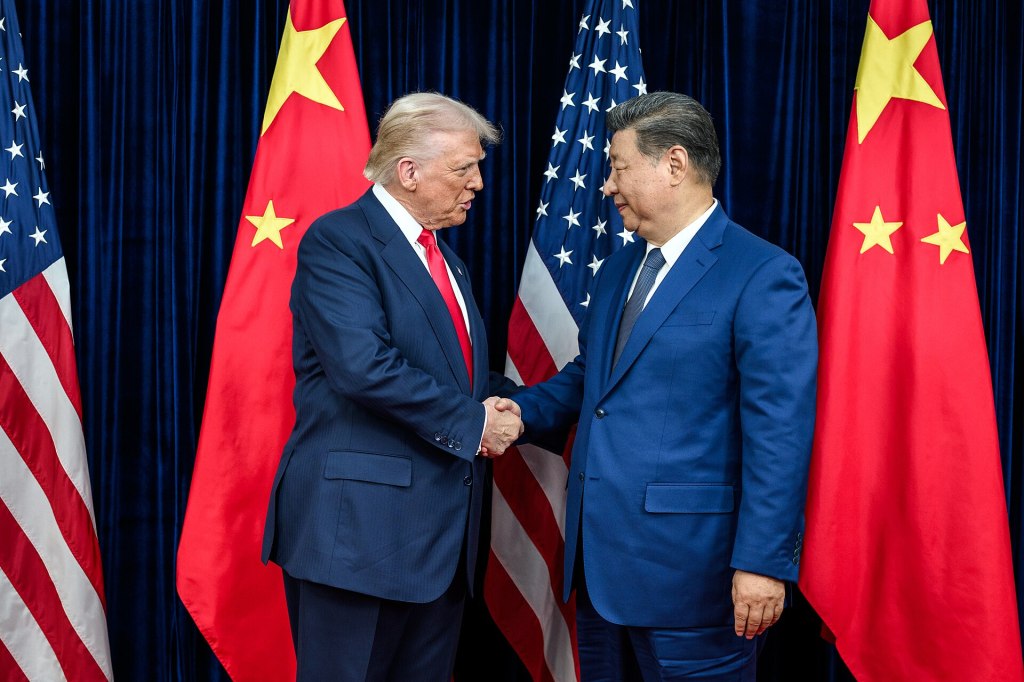
At a banquet at the Chinese embassy on the day before the midterms, an official from one of their ministries told me that he planned to watch the election returns. He viewed the midterms as a referendum on Trump. The Chinese official also wanted to know who would control Congress since this would have an impact on the Chinese government and his job, too.
For all its symbolic importance, the outcome of the midterms is unlikely to change fundamental aspects of the US-China relationship.
— Tara McKelvey
After the defeat of Republicans on Tuesday, many people in Beijing celebrated. They hated Trump. For all its symbolic importance, however, the outcome of the midterms is unlikely to change fundamental aspects of the US-China relationship. Those in Washington and Beijing will still fight over crucial subjects such as Taiwan, trade and the South China Sea, and Trump is not going anywhere soon. Nevertheless, many in Beijing celebrated: the term ‘total defeat’ went viral on Weibo.
03 · Jodi Vittori
This Election Was About Corruption, So Now What?
Jodi Vittori, Professor of the Practice and Co-Chair of the Global Politics and Security concentration at Georgetown University’s School of Foreign Service
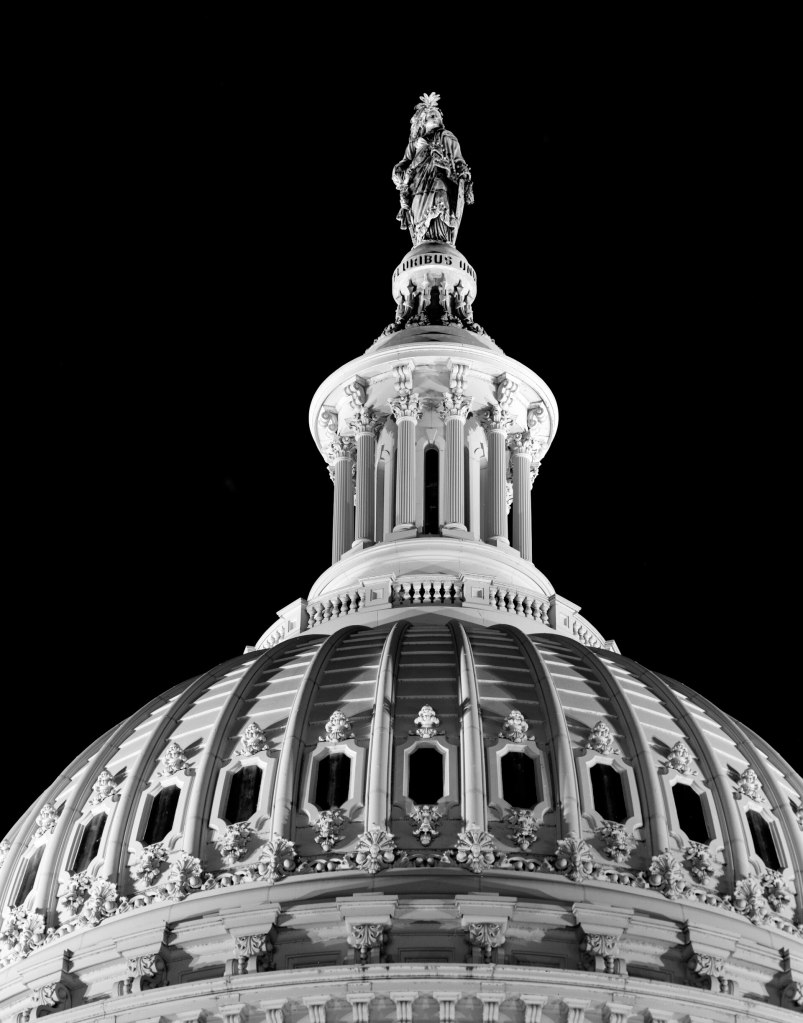
In the runup to the Midterms, many polls noted that perceived corruption—especially by the Trump inner circle—had become a primary concern for voters. Democrats ran on anti-corruption messaging, and voters will expect them to deliver ahead of the 2028 elections. What should they do?
Good governance practitioners and scholars have found that after a dramatic changeover of power, political reformers tend to have about a two-year window to enact their reforms before those who had benefited from corruption are able to regain their footing to stymie reforms. Thus, incoming members of Congress must work quickly when they take their seats in January.
After a dramatic changeover of power, political reformers tend to have about a two-year window to enact their reforms.
— Jodi Vittori
To show that the old rules have changed, those entering government after an anti-corruption landslide should make some immediate, relatively easy reforms. Because Democrats lack a veto-proof majority, they should focus on demanding that existing anti-corruption laws be enforced, including the Foreign Corrupt Practices Act and the Corporate Transparency Act.
This is an excerpt from “This Election Was About Corruption, So Now What?,” published in Democracy and Society. Read the full article here →
04 · Jeffrey W. Fischer
A Sweep in Scale and Scope
Jeffrey W. Fischer, Senior Fellow at Georgetown University’s Center for Democracy and Civil Society and Adjunct Lecturer in the Democracy and Governance Program
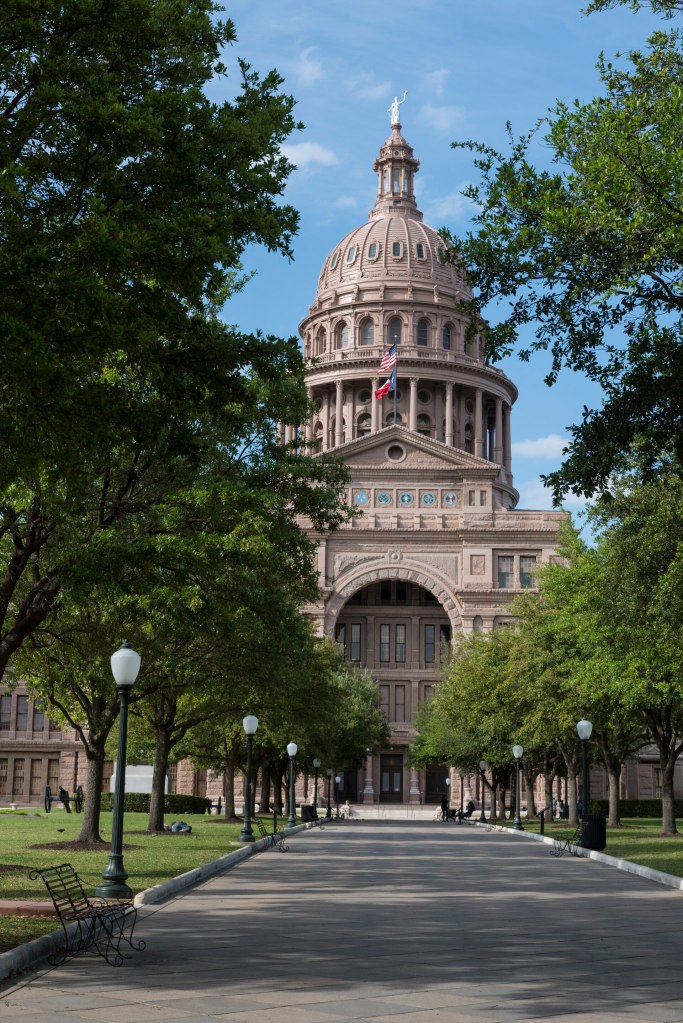
The most significant takeaways can be categorized by scale, scope, and what did not take place. By scale, the overwhelming vote electing Democrats to control the Senate and House as well as winning a number of governorships from Republican incumbents and candidates represents a partisan sweep on a scale which has not often been experienced in recent US elections.
By scope, the unprecedented election of a Muslim as US Senator, a Latina as Governor of Texas, the first African American woman ever elected governor, the election of candidates representing the Democratic Socialists of America, four additional African American Governors, and a number of scientists, doctors, and engineers, represents a diversity of voters’ selection which has not been experienced in US elections. While the current political climate remains dynamic, it advantages Democrats and their policy priorities over the short term.
A partisan sweep on a scale which has not often been experienced in recent US elections.
— Jeffrey W. Fischer
However, it must also be recognized that the range of Democratic ideologies in the current party composition extends from what can be described as socialist to moderate, so there is much intra party positioning required on unifying politics and positions. And, for the Republicans, there is an existential consideration in determining what the party now represents and how it can rebuild to become credible in the eyes of the US electorate.
What did not take place were disruptions to the voting by federal authorities—ICE at polling stations, calling out the National Guard, Department of Justice closures of polling stations, arrests of election officials, and other speculative threats which were in the public arena before the election.
This is an excerpt from a longer piece by Jeffrey W. Fischer to be published in Democracy and Society. Read the full article here →
(*) Victoria Brusa is a Fulbright Scholar, currently pursuing an MA in Democracy and Governance at Georgetown University. She serves as Democracy and Society Senior Editor.
(*) Katie Zeng is currently pursuing a Master’s degree in Democracy and Governance at Georgetown University, with a previous Bachelor degree in Political Science and International Affairs from Wake Forest University.
(*) Atiriya Singh is a first year M.A. student in Democracy and Governance at Georgetown and a recent graduate of New York University, with a degree in Global Liberal Studies.